Introduction
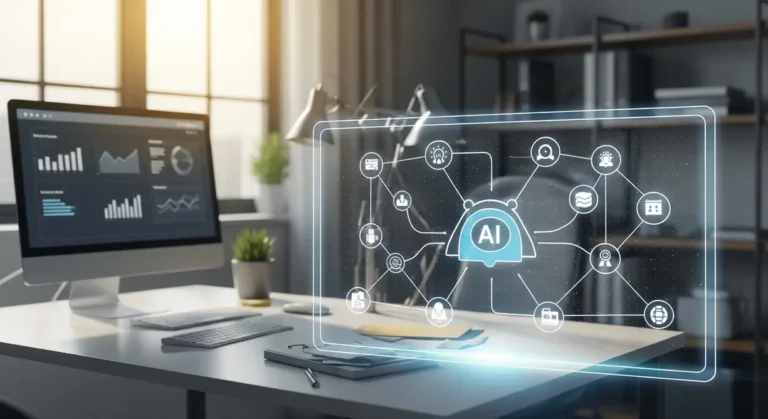
For small business owners, navigating the digital landscape often means juggling countless tasks and seeking innovative ways to boost productivity without increasing overhead. While you might be familiar with basic AI tools like voice assistants, a new generation of intelligent software is emerging: AI agents. These sophisticated systems move beyond simple responses to direct commands, offering a powerful capability to understand goals, plan multi-step processes, and execute tasks autonomously. Understanding what AI agents are and how they operate is key to envisioning their potential impact on your daily operations. This article will demystify these proactive digital employees, first by defining their unique characteristics, then by exploring their core functions, and finally by showcasing their diverse applications and types, all tailored to illuminate how they can become invaluable assets for your business.
Chapter 1: Defining What is AI Agents: Autonomy and Proactivity in Software Systems
For small business owners, the concept of a digital assistant that anticipates needs rather than just reacting to commands might sound like science fiction. Yet, this is precisely what AI agents offer. Unlike traditional, reactive AI assistants like Siri or Alexa, which wait for your explicit instructions, AI agents are designed to be truly autonomous and proactive.
So, what is AI agents? They are sophisticated software systems that can perceive their environment, understand predetermined goals, plan multi-step actions, and then execute those tasks with very little human intervention. Imagine a digital employee who doesn’t just respond to requests but actively identifies opportunities, addresses challenges, and works towards your business objectives.
This distinction is crucial for small businesses. Instead of merely fetching information, an AI agent can design and implement complex workflows. It can utilize various tools – from accessing databases to interacting with your existing software via APIs, or even coordinating with other AI systems. This means an AI agent can, for example, monitor your inventory, notice a low stock level, and then initiate an order process based on predefined rules, all without you having to prompt it. It’s a significant leap from simply asking for a stock count to having a system that manages the reorder process from start to finish. To explore how such advanced solutions can benefit your operations, visit aidevelopers.in. This proactive capability allows small businesses to offload repetitive or complex operational tasks, freeing up valuable human capital for strategic growth and customer engagement.
Chapter 2: Core Functionalities of What is AI Agents: Perception, Reasoning, and Action
To truly understand what is AI agents and how they function, it’s essential to grasp their three core operational pillars: perception, reasoning/decision-making, and action. These functions work in a continuous loop, enabling agents to operate effectively in dynamic business environments.
-
Perception: This is an AI agent’s ability to gather data from its environment. For a small business, this could mean an agent perceiving incoming customer emails, monitoring sales data from your e-commerce platform, tracking inventory levels in a database, or even analyzing social media mentions. These ‘sensors’ or input mechanisms allow the agent to build a comprehensive understanding of the current situation relevant to its goals.
-
Reasoning/Decision-Making: Once data is perceived, the agent moves into its ‘thinking’ phase. Here, it plans based on the gathered context and its defined objectives. This often involves complex problem-solving. For instance, if an agent perceives a sudden spike in customer support queries for a particular product (data perception), it can then reason that a product-related issue might be occurring and decide on the next steps, such as escalating to a human agent or searching a knowledge base for a common solution. Recent breakthroughs in generative AI and large language models (LLMs) have significantly enhanced this capability, allowing agents to understand nuanced language and context from unstructured data like customer reviews or long-form documents.
-
Action: The final stage is the execution of the planned changes. Based on its reasoning, an AI agent can perform a wide array of tasks. This might include automating responses to customer inquiries, adjusting pricing based on market demand, updating your CRM with new client information, or even flagging potential compliance issues. These actions can be automated across different systems, streamlining processes that would typically require significant manual effort. As AI agents handle sensitive business data, it’s crucial to understand how data is managed; learn more at aidevelopers.in/privacy-policy/.
Chapter 3: Applications and Types of What is AI Agents: Real-World Implementations and System Architectures
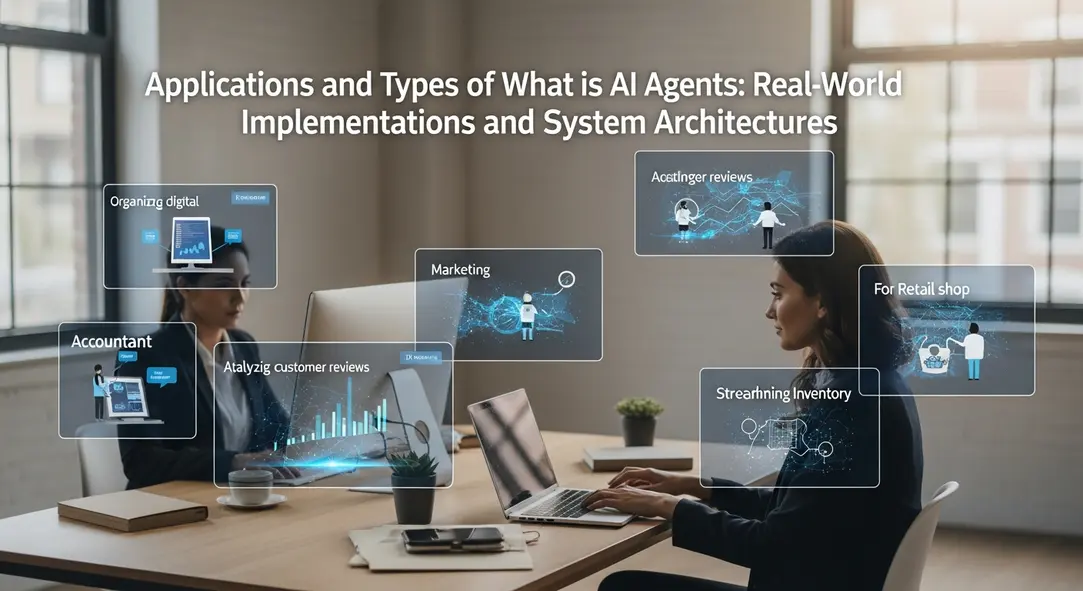
The versatility of AI agents makes them applicable across numerous industries and business functions, offering tangible benefits for small businesses. Understanding what is AI agents in practice means looking at their diverse applications and how they are categorized.
Real-World Applications for Small Businesses:
- Data Validation: Ensuring the accuracy and compliance of customer information, order details, or financial records, reducing costly errors.
- IT Automation: Streamlining operational processes such as setting up new employee accounts, managing software updates, or proactively addressing system issues.
- Customer Support: Advanced virtual assistants can triage complex customer inquiries, provide personalized recommendations, and even complete transactions autonomously, freeing up human staff for more nuanced interactions.
- Recommendation Systems: For e-commerce businesses, agents analyze user data to provide personalized product suggestions, enhancing customer experience and driving sales.
Types of AI Agents:
- Aggregation Agents: Focused on synthesizing diverse data from multiple sources. Think of an agent collecting market research, competitor pricing, and social media trends to provide a comprehensive business intelligence report.
- Action Agents: Designed for executing specific tasks. An action agent might automate the process of sending personalized follow-up emails to new leads or managing your social media posting schedule.
- Ambient Agents: Operating in the background for continuous monitoring. This could be an agent tracking website performance metrics, monitoring for unusual activity on your network, or alerting you to important news related to your industry.
Furthermore, AI agents can collaborate within multi-agent systems, powered by agentic AI. This means several agents can coordinate to achieve broader objectives across multiple tools and teams—for example, one agent handles lead generation, another qualifies leads, and a third schedules follow-ups. In dynamic environments, the ability of AI agents to maintain an internal state significantly contributes to their reliability and consistent performance, acting as a memory of past interactions and decisions. To explore how these advanced systems can be tailored for your specific business needs, don’t hesitate to reach out to us at aidevelopers.in/contact-us/ or learn more about our expertise at aidevelopers.in/about-us/.
Final thoughts
AI agents represent a powerful evolution in artificial intelligence, moving beyond simple reactive tools to become proactive, autonomous partners for small businesses. By understanding what AI agents are – systems that perceive, reason, and act – business owners can unlock unprecedented levels of efficiency, automate complex workflows, and free up valuable human resources. Whether it’s through data validation, IT automation, or sophisticated customer support, these intelligent systems are poised to streamline operations, drive growth, and allow your business to thrive in an increasingly competitive landscape. Embracing AI agents today means preparing your business for a smarter, more automated future.
Ready to elevate your business with cutting-edge automation? Contact aidevelopers.in Agency today and let our expert team guide you to streamlined success with AI-driven solutions!
About us
This article has been reviewed and refined by Yaswanth to ensure accuracy, clarity, and practical value for readers. Yaswanth is an experienced automation developer with over 7 years of hands-on expertise designing, building, and optimizing automation workflows across various platforms and industries. His work focuses on simplifying complex processes, improving efficiency, and helping teams leverage technology more effectively.